
Angular vs React: How to Pick the Best for Your Web Project
When starting a new web project, one of the most important decisions you will face is choosing the right front-end technology. The tools you select can affect not only how your application looks but also how it performs, scales, and adapts over time. Among the most popular choices, Angular vs React often comes up in discussions. Both are trusted by thousands of businesses and developers worldwide, but they offer very different approaches. So, how do you know which one is right for your project? This blog will break down the differences, compare their strengths, and give clear guidance so you can make an informed choice. What is Angular? Angular is a full-fledged front-end framework developed and maintained by Google. Built on TypeScript, it is known for its inflexible structure and robust features. With Angular, developers get everything out of the box: routing, form validation, dependency injection, and testing utilities. Key Features of Angular Best Use Cases Angular is used for large-scale enterprise applications, complex dashboards, and apps where strict architecture is required. For example, financial platforms or healthcare systems often benefit from Angular’s structured approach. What is React? React, developed by Meta (formerly Facebook), is a JavaScript library rather than a full framework. This flexibility is one of the reasons for its huge popularity. React focuses on building interactive user interfaces and lets developers choose external libraries for routing and state management. Key Features of React Best Use Cases React is ideal for single-page applications, e-commerce sites, and startups where flexibility and rapid iteration matter. Companies like Instagram, Airbnb, and Netflix rely on React to handle high-performance, user-focused applications. Angular vs React: A Head-to-Head Comparison Learning Curve and Developer Experience Angular can be challenging to learn because of its comprehensive structure and support for TypeScript. React, on the other hand, has a shorter learning curve, making it beginner-friendly while still offering scalability. Performance and Speed React’s Virtual DOM gives it an edge in performance, especially in applications with frequent updates. Angular is fast too, but its real strength lies in handling large, complex projects with multiple modules and data interactions. Architecture and Flexibility Angular provides everything in a complete package, which can be both a strength and a limitation. React offers flexibility, allowing developers to choose from a variety of tools and libraries. If you prefer freedom, React is a great choice; if you want a ready-to-go solution, Angular works better. Community and Ecosystem React’s community is huge, with countless libraries and third-party tools. Angular also has a strong backing from Google and a loyal developer base, but its ecosystem is more structured and less experimental. UI Components and Libraries Both support UI/UX design at a high level. Angular comes with built-in UI libraries, while React relies on external ecosystems such as Material UI and Ant Design. Key Factors to Consider Before Choosing When to Choose Angular When to Choose React Cost and Resource Availability Finding skilled developers is another factor in the Angular vs React discussion. React developers are often more widely available, making it easier to staff projects quickly. Angular developers, while fewer, are experienced with large-scale applications. Cost depends on the talent pool in that region, but overall, React developers might be more budget-friendly due to higher availability. Future Trends Both React and Angular continue improving and adding new features. Angular is focusing on improved performance and developer tools, keeping its stronghold in enterprise solutions. React is pushing boundaries with server-side rendering (SSR), concurrent features, and React Native for mobile app development. For many businesses, the decision boils down to React and Angular, fitting different goals. While React dominates the startup ecosystem, Angular continues to thrive in complex, enterprise-grade environments. React vs Angular: Which is Better? This question does not have a one-size-fits-all answer. If performance, flexibility, and speed to market matter most, React may be the right choice. If structure, scalability, and a full toolkit are your priorities, Angular will serve you well. Conclusion The Angular vs React debate will likely continue as both frameworks evolve and adapt to modern web development challenges. The best choice ultimately depends on your project goals, team expertise, and long-term vision.If you want a structured, enterprise-grade solution, Angular is often the winner. If you need agility, flexibility, and faster time-to-market, React may be your best partner. The decision should align with your project’s unique needs. When in doubt, consult Seventh Foundation, the best web development company, which can guide you through the process and recommend the best technology stack tailored to your business success.
Website Development Cost in India: Comprehensive Guide
Title Page Separator Site title Having a well-designed website is essential for success in the modern business world. A well-designed website connects you with customers throughout the world, promotes your brand, and fosters trust. Whether you are running a startup, a mid-sized firm, or a large enterprise, your website acts as the backbone of your digital presence. But before investing, most business owners ask: What are the website development costs in India? Since no two websites are the same, costs can vary significantly. This in-depth guide covers the main determinants of pricing, a thorough cost analysis, potential hidden costs, and how to pick the best development partner for your requirements. Factors Affecting Website Development Cost in India The total investment required depends on several elements. Here are the most important ones to consider: Understanding these factors helps you plan your budget realistically and avoid unexpected expenses. Breakdown of Website Development Cost in India To provide more clarity, here’s a breakdown of common website categories and their costs: It shows why there is no fixed answer to the question of pricing; it always depends on scope and requirements. Website Development Cost by Business Size Businesses of different scales need different website features, which directly affect costs. By aligning your budget with your business needs, you can avoid overspending while ensuring your website delivers results. Hidden Costs to Consider When calculating the overall website development costs in India, business owners often forget about additional costs that impact the total. Here are some key hidden expenses: By accounting for these, you get a realistic estimate of the actual cost of running a website. How to Find the Perfect Website Development Partner in India Selecting the right team to build your website is as important as setting your budget. Here’s what to check before finalizing: Choosing the right partner ensures your website is not only visually appealing but also built for long-term performance. Tips to Save on Website Development Cost in India Creating a quality website doesn’t have to drain your budget. Here are some effective ways to cut costs: These strategies ensure you maximize value without compromising on quality. Conclusion Understanding website development costs in India is crucial for businesses planning to build or upgrade their online presence. From simple business sites to advanced custom solutions, costs vary depending on design, features, and development partners. Always remember to factor in hidden costs such as SEO, security, and future scalability when setting your budget. If you are searching for a reliable web development company, Seventh Foundation offers customized solutions that fit different budgets and business needs. With the right planning and the right partner, your website can become a powerful tool to drive growth and success in the digital world.
Website Redesign Services: Guide to Selecting the Best Company
A website is more than just an online presence; it is the face of your business. If your site looks outdated, loads slowly, or does not engage visitors, you could be losing potential customers every day. It is where professional website redesign services come into play. With a huge number of service providers, it has become a hassle to choose the right partner for your business. In this blog, we will guide you through everything you need to know to make an informed decision. Why Your Business Needs Website Redesign Services Even if your website is functional, there are several reasons why a redesign might be necessary: 1. Outdated Design Impacts Credibility A website that looks old-fashioned can hurt your brand’s credibility. Users tend to trust modern, professional-looking sites more than outdated ones. It can help refresh your site’s look and make it more appealing to visitors. 2. Poor User Experience Reduces Conversions If your website is hard to navigate, visitors will leave quickly. Redesigning your website can improve usability, making it easier for users to find information, engage with content, and complete desired actions like filling forms or making purchases. 3. Slow Loading Times Affect SEO and Engagement A slow website is not ideal for visitors, and it can also harm the traffic rate. Professional website redesign services often include speed optimization, ensuring your site loads quickly across all devices. 4. Mobile Responsiveness is a Must With mobile traffic increasing every year, a website that isn’t mobile-friendly will lose a significant number of users. Modern redesign services ensure your site is responsive and accessible on all screen sizes. Key Components of Website Redesign Services When searching for a provider, it is important to understand the key services a professional web design company offers in a website redesign. 1. UI/UX Improvements A good redesign focuses on user experience (UX) and user interface (UI) design. It ensures visitors can navigate easily, understand your offerings, and have a pleasant browsing experience. 2. Responsive and Mobile-Friendly Design Redesign services ensure your website works seamlessly on desktops, tablets, and smartphones. Mobile responsiveness is essential for user engagement, as a large portion of web traffic comes from mobile devices. 3. SEO Optimization Redesigns are an opportunity to improve your site’s search engine visibility. Professional services optimize meta tags, headings, URLs, and content structure to enhance organic traffic. 4. Content Restructuring During a redesign, content can be reorganized to highlight your most important products or services, improve readability, and drive engagement. 5. Integration with Analytics and Marketing Tools Professional providers integrate tools like Google Analytics, CRM systems, and marketing automation platforms, helping you track performance and improve ROI. Steps Involved in a Professional Website Redesign Understanding the process helps you evaluate potential providers: 1. Analysis & Audit The provider reviews your current website, analyzing design, content, performance, SEO, and user behavior to identify gaps and improvement opportunities. 2. Goal Setting Clear objectives are defined for the redesign. Whether it’s improving conversion rates, enhancing brand perception, or boosting organic traffic, setting measurable goals ensures the redesign aligns with your business needs. 3. Wireframing & Design Design experts create wireframes or mockups to visualize the new layout and structure. This stage focuses on aesthetics, user experience, and overall look and feel. 4. Development & Testing After approval, the website undergoes web development using the latest technologies, ensuring responsive design, fast loading times, and seamless functionality. Benefits of Hiring Professional Website Redesign Services Working with experienced providers offers several advantages: 1. Improved User Experience and Engagement A professional redesign ensures your visitors enjoy navigating your site, increasing the likelihood of returning and taking action. 2. Better SEO Performance Expert redesign services optimize your site structure, content, and speed, improving rankings on search engines and attracting more organic traffic. 3. Higher Conversion Rates A well-designed website guides visitors through the buying journey, resulting in more leads, inquiries, or sales. 4. Future-Proof Design Professional services use modern technologies and design trends, ensuring your website remains relevant and scalable for years to come. How to Choose the Ideal Website Redesign Service Provider For Your Business Selecting the right provider is critical for a successful redesign. Here are some tips: Common Mistakes to Avoid When Choosing a Provider Conclusion Investing in professional website redesign services is one of the most effective ways to improve your online presence, engage visitors, and drive conversions. By understanding your business goals, evaluating provider portfolios, and ensuring the redesign process includes UI/UX improvements, SEO, and mobile responsiveness, you can select the right partner for a successful website transformation. Choosing the right web partner does not have to be difficult. Seventh Foundation is the best web design company, offering experience, a clear process, and proven results. Your website is an investment in your brand, and with our modern, easy-to-use designs, it can bring long-term growth to your business.
Why Hire a Digital Marketing Agency for Small Businesses
For small businesses, having a strong digital presence is no longer optional; it is essential. Customers today trust search engines, social media, and online reviews to make purchasing decisions. Competing with bigger companies can be tough, especially when you have limited resources and experience. This is where a digital marketing agency for small businesses plays a vital role. These agencies support small businesses in maintaining their competitiveness in the online market and growing steadily by providing their professional expertise and practical strategies. The Challenges Small Businesses Face Online Running a small business means managing multiple responsibilities, from customer service and operations to product development and finances. When it comes to marketing, many owners face challenges such as: These challenges can slow growth and limit options. Hiring a digital marketing company addresses these issues head-on by providing the resources and strategies needed to succeed. What a Digital Marketing Agency Offers to Your Business Small businesses benefit greatly from the partnerships they form with specialized agencies. Instead of struggling with trial-and-error methods, they gain access to: Partnering with a digital marketing agency ensures that marketing campaigns are managed strategically and efficiently. Key Benefits of Hiring a Digital Marketing Agency Partnering with a digital marketing agency gives small businesses the right tools, effective strategies, and expert support they need to grow, reach more customers, and compete in the fast-moving online world. 1. Cost-Effective Marketing Hiring full-time staff for every aspect of digital marketing can be expensive. Agencies offer flexible pricing models and provide access to a wide range of services at a fraction of the cost. It ensures small businesses get maximum value for their investment without compromising quality. 2. Time-Saving Small business owners often wear multiple hats, leaving little time for marketing. With an agency handling the heavy lifting, they can focus on core operations like customer service and growth. Digital marketing tasks also reduce stress and help owners maintain a better work-life balance. 3. Access to Expertise Digital marketing involves specialized knowledge of SEO, advertising, email, and content marketing. Agencies employ experts who stay updated with industry changes and know what works. This access to diverse skills allows small businesses to compete with larger companies that have in-house teams. 4. Scalable Solutions As a business grows, so do its marketing needs. The company can scale services, whether by expanding social media efforts, managing bigger ad budgets, or launching new campaigns, without requiring internal restructuring. This flexibility ensures that marketing strategies evolve in line with the company’s growth and changing goals. 5. Measurable Results Agencies use data-driven methods to track progress. From conversion rates to ROI, small businesses can see exactly how their marketing dollars are being spent. This clarity ensures accountability and confidence in results. Detailed reporting provides clarity and empowers business owners to make informed decisions for future campaigns. In short, a digital marketing agency for small businesses helps owners achieve more with fewer resources, ensuring every dollar contributes to measurable outcomes. Services Offered by a Digital Marketing Agency Partnering with a digital marketing agency equips small businesses with the tools they need to compete with larger companies. Here are the main services they offer: 1. Local SEO & Google Business Profile Optimization Agencies optimize your Google Business Profile and improve local SEO strategies, helping your business appear in local search results and increasing visibility in your community. 2. Pay-Per-Click (PPC) Advertising They create and manage PPC campaigns (Google Ads, Bing Ads) to drive targeted traffic to your website. They optimize ad performance, ensuring you reach the right audience while maximizing your advertising budget. 3. Social Media Management & Brand Building Agencies handle social media management, creating engaging content, and building a strong online presence to improve brand recognition and foster customer loyalty across platforms like Facebook, Instagram, and LinkedIn. 4. SEO & Website Optimization Through comprehensive on-page and technical SEO strategies, agencies ensure that your website ranks well in search engines and delivers a great user experience with faster load times and mobile optimization. 5. Content Marketing & Copywriting They help create valuable content that resonates with your target audience, including blog posts, website copy, and social media content, driving engagement and improving your website’s SEO. 6. Analytics & Performance Tracking Agencies use analytics tools to monitor the performance of your campaigns, providing data-driven insights that allow you to refine and optimize your strategies for results. Signs It’s Time to Hire a Digital Marketing Agency Not every small business realizes the right moment to seek outside help. Here are key signs it’s time to consider hiring one: When these red flags appear, a digital marketing agency for small businesses can step in to transform ineffective marketing into growth-driven initiatives. Choosing the Right Digital Marketing Agency Not all agencies are the same, and small businesses should take a thoughtful approach when selecting one. Key considerations include: Some small businesses also prefer agencies that offer complementary services like web design, ensuring their digital presence is strong from both a branding and technical perspective. Conclusion Small businesses cannot afford to ignore online marketing. Hiring a digital marketing agency for small businesses provides access to expertise, tools, and strategies that drive measurable growth while saving both time and money. From improving local visibility to competing effectively with larger brands, agencies empower small businesses to achieve long-term success. Choosing the right partner for your digital journey can make all the difference in gaining sustainable growth. Seventh Foundation is a trusted digital marketing company, offering affordable solutions and a dedicated team that can handle everything from SEO to paid ads. Partnering with the right agency is an investment that pays off, and with Seventh Foundation, small business owners can strengthen their brand presence and secure a place in the marketplace. Our team delivers strategies customized to small businesses, ensuring measurable growth and long-term success.
Why Website Maintenance Services are Essential for Your Business
Your website tells the story of your business to every visitor. It acts as your online storefront, sales representative, and customer service channel; all rolled into one. A website can have problems without you noticing, unlike a store you see every day. Security problems and slow performance might not be obvious at first, but they can quickly harm your business. This is why website maintenance services are so important. They keep your site updated, secure, and running smoothly so that your business can operate without interruption. Think of these as regular check-ups for your website, helping everything run smoothly and fixing problems early. What are Website Maintenance Services Website maintenance is the ongoing process of updating, managing, and optimizing a website after it goes live. Website maintenance involves much more than just updating content or design. It includes several important tasks, such as: While it might be tempting to handle this in-house, the reality is that consistent and professional website maintenance services save you time and provide peace of mind. They ensure your site runs well, so you can focus on growing your business without worrying about website problems. Why Website Maintenance is Essential Launching a website is just the first step. To stay effective, your site requires regular updates, improvements, and monitoring. Here’s why maintenance is essential for any business: 1. Strong Security Hackers target thousands of websites every day. Outdated plugins, old themes, or missed updates make your site vulnerable. A single breach could compromise customer data, harm your reputation, and even result in financial penalties. Regular maintenance closes these gaps and keeps your business protected. 2. Better Website Performance Visitors expect a website to load within seconds. Poor performance can cost you visitors in seconds. Maintenance ensures your website stays fast and reliable, offering smooth navigation and working features that keep users engaged. 3. Improved SEO Rankings Google rewards well-maintained websites. Regular updates, error fixes, and content improvements all boost your site’s credibility in search engines. The impact of website maintenance on digital marketing performance is direct; SEO, paid ads, and content campaigns all work more effectively when your site is optimized. 4. Improved User Experience A strong online presence starts with a website that captures attention and builds trust. If they discover broken links, outdated content, or errors, they are likely to leave. Maintenance ensures a professional, seamless experience that builds trust and enables visitors to take action. 5. Cost Savings Ignoring your website may seem more affordable in the short term, but these issues can quickly convert into costly problems. Regular upkeep prevents emergencies like data loss, crashes, or complete rebuilds, saving both time and money in the long run. Outcomes of Ignoring Website Maintenance Skipping maintenance may not cause problems right away, but over time, it can harm your website. Some of the risks include: In short, skipping maintenance can turn your website from a help into a problem. Instead of growing your business, it can slow you down. How Professional Website Maintenance Services Help Businesses When you work with experts, you gain more than just technical help; you get confidence and peace of mind. Professional maintenance services often include: By outsourcing maintenance, you free yourself from the technical burden while ensuring your website stays reliable and aligned with business goals. Who Needs Website Maintenance Services The truth is that every business with an online presence needs maintenance. However, some businesses benefit even more: The industry or size does not matter; if your website is a key part of your customer journey, maintenance is not optional; it is essential. Choosing the Right Website Maintenance Partner Not all providers are the same, so selecting the right partner is critical. Here are key factors to consider: The right partner should feel like an extension of your team, someone who understands your goals and ensures your website continues to support them. Additional Benefits of Website Maintenance Services Beyond the essentials, professional maintenance offers several extra advantages: These benefits may seem small individually, but they create a polished, reliable online presence that attracts and retains customers. Conclusion A website is not a one-time project; it is a long-term business asset that requires consistent attention. Professional website maintenance services keep your site secure, updated, and optimized so it can continue to support your growth. The advantages are clear: stronger security, better performance, improved SEO, and user experiences. If you are serious about your online presence, it is time to invest in professional maintenance before problems arise. Seventh Foundation specializes in keeping websites safe, updated, and ready to grow with your business. From security checks to ongoing support for web development projects, we handle it all so you can focus on your customers.
Top Benefits of Choosing the Right CRM Development Company
Good customer relationships are essential to any successful business. That’s why companies use CRM (Customer Relationship Management) systems to manage leads, keep track of interactions, and build strong connections. But the truth is, most CRMs are not a perfect fit for every business. But here’s the truth: generic CRM tools often do not fit every business perfectly. They might work for some, but as your business grows, you will notice gaps in functionality, flexibility, and scalability. It is where partnering with the right CRM development company becomes a game-changer. By working with experts, you do not just get software, you get a customized solution that grows with your business. Understanding CRM Development CRM development is all about designing a system that matches your unique business strategies. Instead of pushing your team to adjust to fixed software, a custom CRM adapts to your work style. Custom CRM development lets businesses do things that ready-made platforms can’t, such as: A trusted CRM development company ensures that your CRM is not just another tool but a central hub for managing customers, sales, marketing, and support. Why Businesses Need CRM Development Shortcomings of Generic CRM Software Generic CRM systems often come with features you may never use while missing the ones you actually need. They can be expensive, strict, and hard to integrate with your existing tools. For small businesses, this means wasted money. For growing companies, it means hitting roadblocks that slow progress. Growing Importance of Customization There’s a lot of competition in the market now. Customers expect personalized experiences, fast responses, and seamless service. A one-size-fits-all CRM can’t deliver that. Customization ensures that your CRM aligns with your workflows, supports your goals, and allows your team to work more efficiently. The Value of Expert CRM Partners Choosing the right partner makes all the difference. An expert CRM development company builds software and becomes a long-term partner in your growth journey. They understand your industry, solve unique challenges, and provide ongoing support to keep your CRM effective as your needs evolve. What are the Benefits of Choosing the Right CRM Partner Customized Solutions for Your Business Needs Every business is different. A retail store, a healthcare provider, and a SaaS startup do not manage customers the same way. They build custom solutions that align with your processes. It ensures your team does not waste time on features that do not matter and instead focuses on what drives results. Improved Customer Experience With all customer data in one place, your team can deliver faster responses and personalized service. Customers feel valued when their history and preferences are understood. Over time, this builds loyalty and trust, which translates into repeat business. Improved Business Productivity Automation is a major benefit of CRM development. Manual tasks like sending follow-up emails, updating records, or tracking deals can be automated. It saves time, reduces errors, and allows your team to focus on building relationships instead of managing spreadsheets. Seamless Integration with Existing Tools Most businesses already use other tools—ERP systems, accounting software, or e-Commerce platforms. A professional CRM development company ensures your CRM integrates smoothly with them. For example, Shopify CRM integration helps online stores sync customer data and purchase history, giving sales teams better insights and improving marketing campaigns. Data Security and Compliance Data is the lifeblood of your business, and protecting it is non-negotiable. Off-the-shelf CRMs might not always meet the security standards you need. A custom-built CRM can include advanced encryption, access controls, and compliance with regulations. It keeps your data safe and your clients confident Ongoing Support and Maintenance A CRM needs ongoing attention, not just a one-time setup. As your business grows, your CRM should evolve too. A good partner does more than deliver your CRM and leave. They provide ongoing updates, fixes, and new features to ensure your system continues to support your goals. Unlike generic vendors, they stay with you for the long term How to Select the Right CRM Development Company Not all partners are the same. Here are a few things to keep in mind when choosing a CRM company: Choosing carefully ensures you do not just get a piece of software, you get a trusted technology partner. Conclusion Businesses can not afford to depend on generic CRM tools that do not align with their unique needs. Partnering with the right CRM development company gives you more than a tool and also a growth plan. From customized solutions and improved productivity to strong data security and seamless integrations, the benefits are hard to ignore. Selecting the right partner is essential for gaining success. Seventh Foundation is a professional CRM development company that helps businesses design, build, and maintain custom CRM solutions that align with their goals and scale with their growth. When you have the right team, delivering great customer experiences and staying ahead is easier.
Static vs. Dynamic Websites: Which One is Right for You
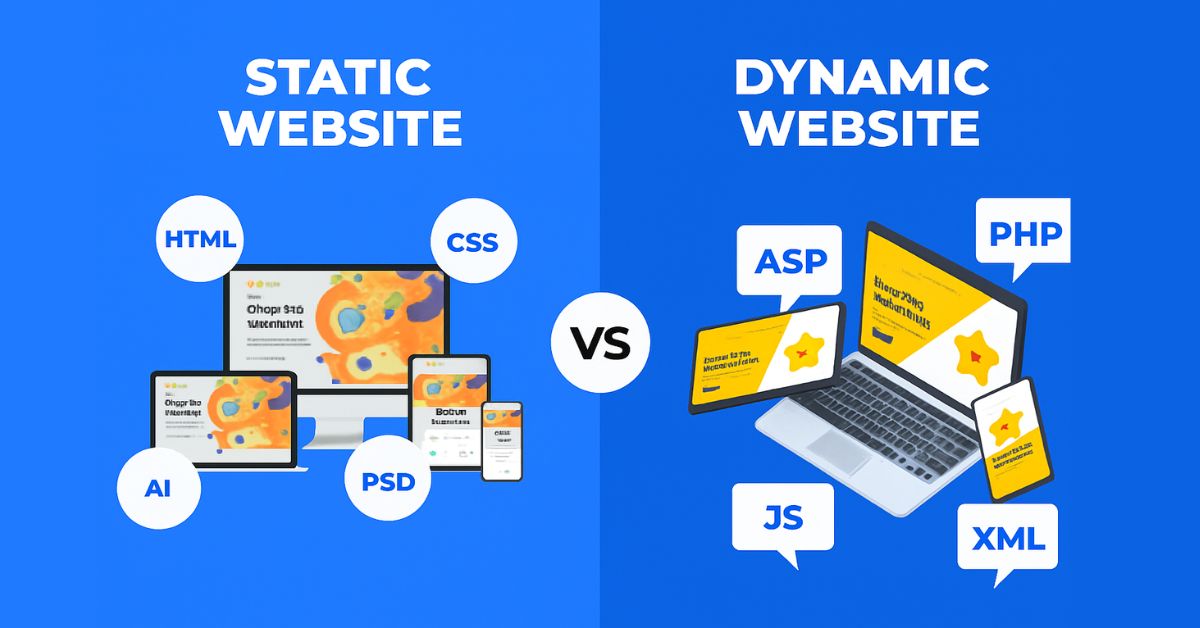
Ready to create your first website, but confused by all the tech terminology? You have likely heard the terms’ static vs. dynamic websites,’ but what do they actually mean? This article serves as your guide to understanding the key contrasts and, more notably, helps you decide which type is right for your project. We will break down the pros and cons of each, providing a clear path forward without the confusion. The choice between static and dynamic websites is a foundational conclusion that will have a substantial impact on your site’s performance, security, and future scalability. What is a Static Website? A static website is like a digital handout. It is built from a set of pre-made HTML files, CSS stylesheets, and JavaScript. When a user accesses your site, the server sends these pre-made, static files straight to their browser. There’s no on-the-fly content creation or interaction with a database. This is why static websites are known for their amazing speed and clarity. They are also highly secure and affordable, but require manual updates to the code for any changes, making them best for sites with fixed content What is a Dynamic Website? A dynamic website is a bustling, interactive hub. Instead of serving pre-made files, the server builds each page in real-time based on a user’s request, pulling content from a database. This constant communication makes dynamic sites very powerful and flexible. They use a Content Management System (CMS) like WordPress, allowing for easy updates and rich functionality such as e-commerce, user accounts, and forums. However, this flexibility comes with a trade-off: they are generally slower, have higher security risks, and are more complex to host and maintain. This is the root issue when deciding between static and dynamic websites. The Side-by-Side Showdown To make your decision easier, let’s put these two competitors in the ring for a head-to-head comparison. This comparison will highlight why the discussion between static and dynamic websites is crucial for different types of projects. Speed & Performance: The Race to the Finish Security: Fortresses vs. Open Gates Content Management: Effortless vs. Hands-On Cost: Budget-Friendly vs. Premium Making the Right Choice for Your Project The winner of this showdown is not a single website type; it is the one that best fits your specific needs. The ongoing discussion about static and dynamic websites is not about which is naturally superior, but about aligning technology with business goals. Conclusion The final decision between static and dynamic websites is a vital one, and it all depends on your specific needs. Static sites are the perfect option for projects focused on speed, security, and simplicity, such as portfolios or brochure sites. Contrarily, dynamic websites are the best option for projects that require flexibility, frequent updates, and complex functionality like blogs or online stores. Finally, your website should be a tool that helps you achieve your business goals. For a smart, effective online presence that is built to last, a careful review of your purpose and plans is essential. If you are still unsure which path to take, our expert team can help. As a leading web design company, we provide professional advice to ensure your website is built on a solid foundation for your success.